What in the world are Elastic Nipples/Tissue?
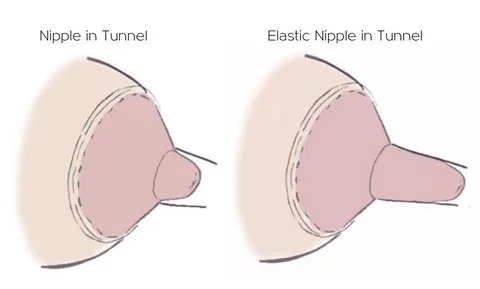
Image from Milkbar Maternity & Breastfeeding
What is it?
You’ve heard it before,
ELLLLASSTICCC NIPPLLLLESSSS. But what is it and how do you know if you have it? No worries. As a elastic tissue mom AND breastfeeding specialist let’s break it down.

*breaking it down^
The quick explanation: Every lactating women has elasticity to her nipples. Nipples are suppose to stretch/be elastic. Especially when we are nursing an infant. This issue lies when we are pumping.
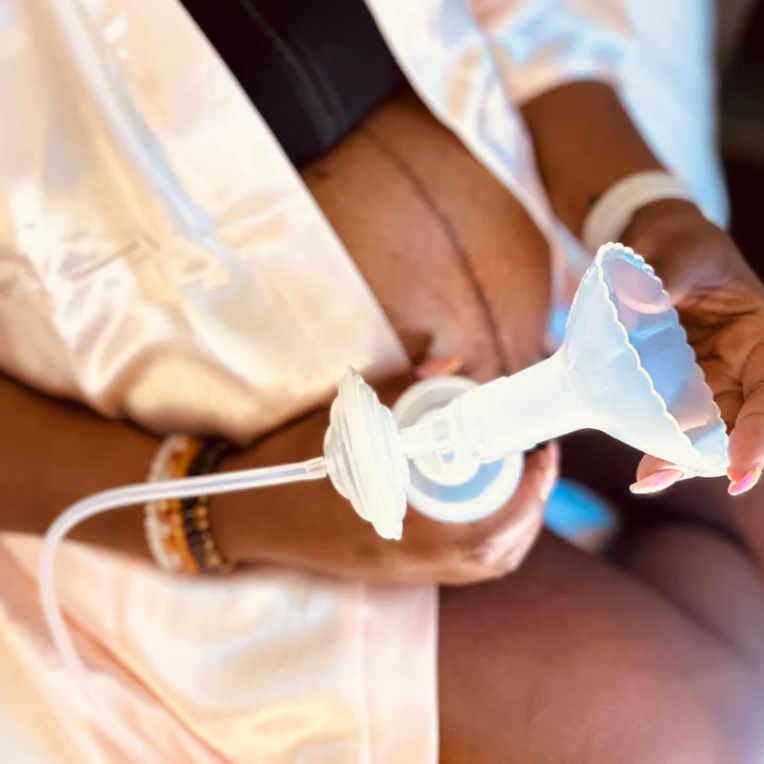
Sometimes, there is TOO much nipple tissue being pulled inside the tunnel. Where as you see in the picture above, has the ability to cause issues (but this doesn’t mean it will cause issues) to a few select of women.
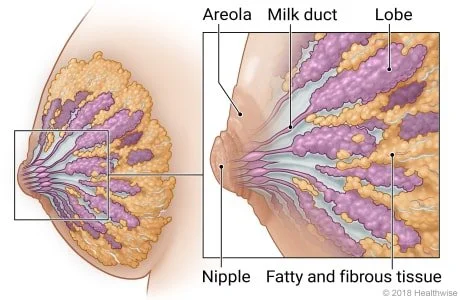
Quick yet important anatomy explanation
Think of your milk ducts (purple example from picture above) as straws carrying milk from your breasts to nipples. And as your nipple stretches, the correct flange size and TYPE of flange/insert can matter if you’re someone which elastic tissue. Why? Because if a straw bends, it has the possibility to affect how the content flows. You can think of your milk ducts in a similar way. But again, a lot of moms with very elastic tissue can and do just fine with something like a hard plastic flange when they are using a standard flange for traditional pumps like a Spectra or Motif Luna.
With wearable pumps, I would usually suggest to look into a wearable with a longer-ish tunnel rather than an Elvie or Momcozy M5. And also using a long insert, my personal favorite is the Willow insert. BUT AGAIN, can a Elvie or Momcozy M5 pump work with a mom with elastic tissue? YES. How do I know? They worked for me despite the fact that I have elastic tissue. Were they the most comfortable pumps to use? No. But take a look at my wearable pump blog to learn more on my honest reviews on wearables and how elastic tissue fits in.
How do I know I have elastic tissue/nipples?
You need to be 100% certain you have the right flange size. Not 95%. Not 99.9% but 100% certain it is correct. Most moms are NOT 24 mm or bigger. We have measured thousands of moms here at The Milk Nest and can confidently say we have found less than 15 moms who are truly 24 mm worldwide & have never found a 27 mm. Yes it is okay if your nipple touches the sides of the inside of tunnel. Good to note as well, a lot of LC’s aren’t up to date on the new sizing protocol so even if you were told by the hospital lactation consultant or another consultant that you are a 24 mm, it’s worth getting a 2nd or 3rd opinion. We usually only like to see nipple in the tunnel. Measuring is just the first step with flange size not the final (we need to see how you react in the size)! Many moms believe they have elastic tissue but it’s actually just a flange size too big where the nipple and areola are being pulled in.
“But I use a 24 mm and it feels comfortable?”
You can still run a race with the wrong shoe size but the correct size, which is also comfortable, can greatly optimize your race.
Your nipples are being stretched very far into the flange. This is best checked with a traditional hard plastic flange set up. Not using a wearable pump. After you are certain you are using the correct size you find that your nipples are being stretched far. This could also mean it is also or almost hitting the back of the flange. Some moms also report the nipple barely moving when inside the tunnel (except for the tip). They can also swell far larger than their usual size during and after pumping.
After a pump session, you still feel full. Now granted that you are taking #1 & #2 into consideration, you find that with hard plastic flanges, you are unable to remove milk efficiently despite the fact of pumping at least 25-30 min. This is where the TYPE of flange can matter. Now that you know you have the right flange size, I would recommend looking into the silicone flanges with your traditional set up.
Silicone Flange Options
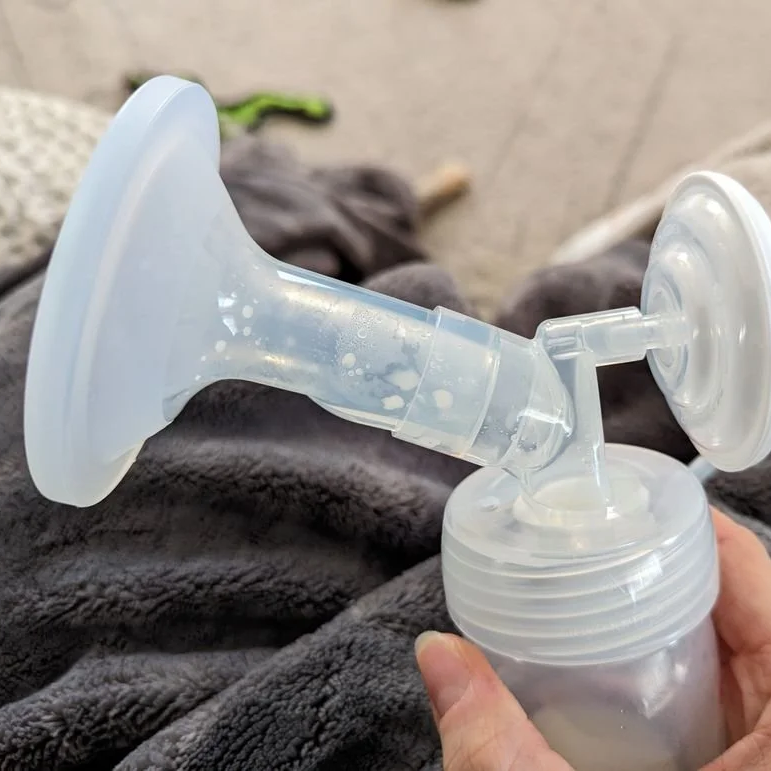
Lacteck Flanges
Offering sizes 12, 15, 18, 21, 24, & 27 mm. These are one of my top favorites to recommend to clients. They don’t necessarily feel like a baby nursing in my opinion. But do work with Spectra, Medela, Cimilre, Motif, & even more! Go to my ‘Hacks’ highlight on Instagram to learn more ways to hack your pump with different set up options!
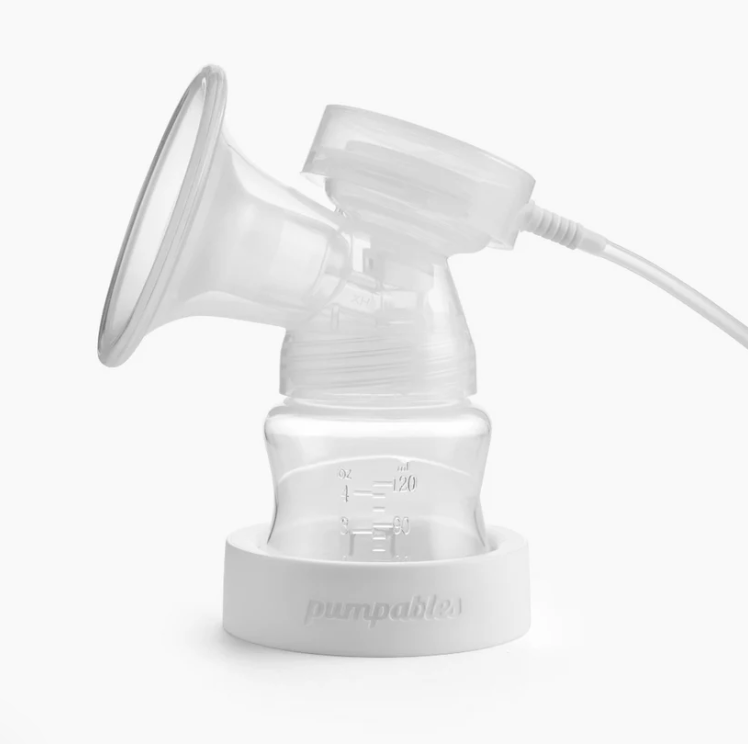
Pumpables Liquid Shield
Was such a hit when I started my practice. Instead of a traditional pull and tug mechanism that occurs with a hard plastic flange, it grasps your nipple. It is definitely a different sensation & find that some of my clients loved it! I didn’t respond the best to it but still worth a try! They carry sizes 15, 17, 19, 21, 25, & 29 mm. Compatible with Spectra, Motif, Zomee, Cimilre, Baby Buddha, the list goes on! Go to my ‘Hacks’ highlight on Instagram to learn more!
BareShield by BareMotherhood
These are unique in it’s own way where it grasps your breast tissue when you put it on. You pull back the flap and align the nipple in then start your pump. This flange feels like a suction in a way. Definitely worth a try. They do feel to run just a smidge big so if you are a 19 mm in a hard plastic flange. Don’t feel nervous to try 18mm. They carry 12, 15, 18, 21, & 24 mm. Compatible with Spectra, Motif, Zomee (with Spectra set up), Cimilre, Baby Buddha (with Spectra set up), the list goes on! Go to my ‘Hacks’ highlight on Instagram to learn more (I talk about the Spectra set up)!
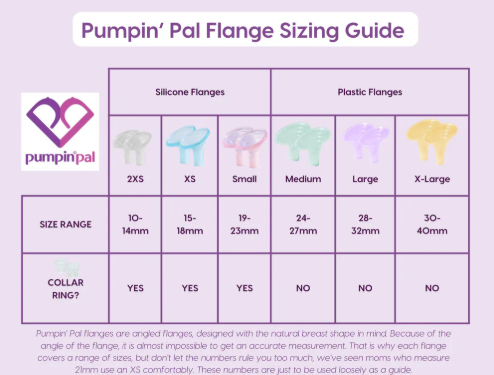
Pumpin’ Pals Angled Flanges
I attached above a sizing range. They sell a OptiFit Flange Set worth checking out if you feel in between sizes. As shown above, sizes 2XS-Small are silicone and Medium-X-Large are plastic. I actually used these with my 1st baby in 2018 when I exclusively pumped so they are near and dear to my heart. You don’t know if they’ll work unless you check it out! Pro tip: For the silicone flanges, flip back and turn on pump. Then allow nipple to be suctioned in when you start your pump then fold flaps back to normal! The instructions help clear more up and they do have great customer service! These are compatible with pumps like Spectra, Motif, Medela, & so many more! I have even seen some hack these in their wearables!
I hope this blog helped & is a resource to help you in your elastic tissue journey!